Emergency Mold Remediation in Littleton, CO
Some mold problems cannot wait for next month. A pipe let go in a wall, a window well overflowed into the basement, or a patch of mold is growing while water is still coming in. MoldCare Littleton helps you decide what is urgent, what is not, and what to do in the first hours so the damage does not grow.
We do not claim a response time we cannot promise. What we do promise is a straight conversation about your situation, a plan in plain words, and a free estimate.
- Free Estimates
- Licensed and insured
When Mold Counts as an Emergency
Not every spot is an emergency, and we will say so honestly. Treat it as urgent when one or more of these is true.
- Water is still entering the space and has not been stopped
- Wet materials have stayed wet for more than a day or two
- Mold is spreading across a wall, ceiling, or floor visibly fast
- A room is musty or hard to breathe in and cannot be used
- Someone in the home has asthma, an immune condition, or a new breathing problem
- A sewage or contaminated water event came before the mold
- You are about to sell, rent, or reoccupy the property
The EPA notes that mold can start growing within 24 to 48 hours on materials that stay wet. That is why the first day matters more than any other.
What to Do Right Now
These steps are safe for most people to take while you wait for help.
1. Stop the Water If You Can
Shut off the water at the main if a pipe has burst. If the cause is a roof, a window well, or a storm, protect the area with a tarp or bucket and move belongings out of the way.
2. Keep People and Pets Away From the Affected Area
Close the door to the room. Do not run fans that blow toward the area, and do not turn on the furnace blower if the mold is near a return vent.
3. Do Not Scrub, Spray, or Sand
Cleaning too early can spread spores to other rooms. Take photos first. They help us, and they help your insurance company.
4. Call Your Insurance Company Early
Ask what your policy covers for water events and for mold. Coverage varies a great deal, and many policies treat sudden water damage differently from slow leaks. Keep receipts and photos.
5. Call Us
Tell us where the water came from, when it happened, and what you see. We will help you sort out what to do first.
What We Do First
Our first visit focuses on the biggest risks.
- We check what is wet and how far moisture has traveled, because mold follows water.
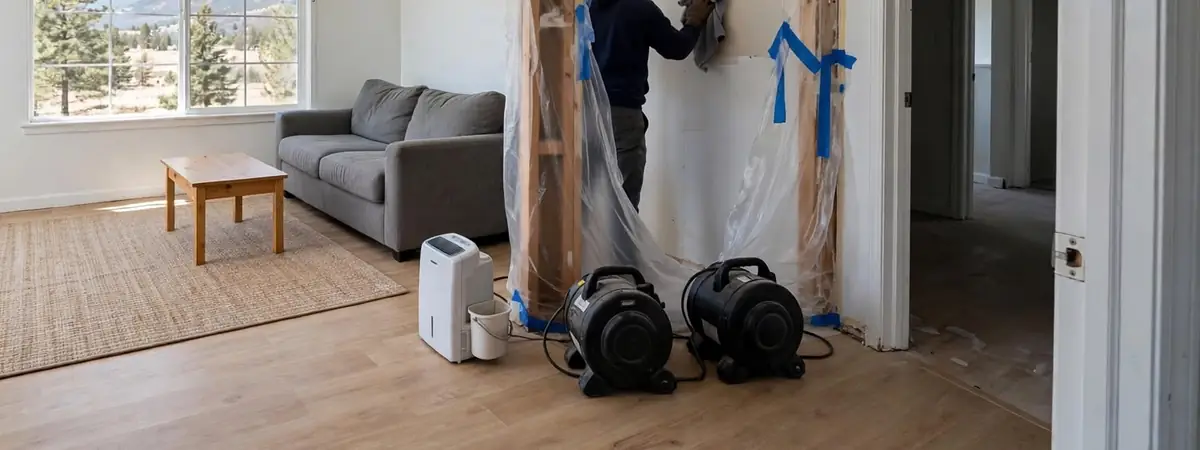
- We separate the damaged area from the rest of the home with barriers and set up HEPA air filtration where the job needs it.
- We remove materials that cannot be saved, such as soaked drywall, carpet pad, and insulation.
- We help dry the structure and explain which repairs need a plumber, a roofer, or a drying contractor.
- We give you a clear price and, if you ask, notes and photos for your insurance claim.
If water is the main problem and mold has not started yet, you may need a water damage company before a mold company. We will tell you which one you need.
Common Urgent Situations in Littleton
A Burst Pipe in Winter
A frozen pipe can release a lot of water inside a wall or ceiling before anyone notices. See our page on mold after water damage for how long materials take to dry and what has to come out.
A Flooded Basement or Window Well
Heavy spring runoff and summer storms can overwhelm a window well or a sump pump. Carpet, pad, and the lower wall are the first things to hold water. Our basement mold remediation page explains the steps.
A Roof Leak After Hail or an Ice Dam
Wet insulation and ceilings grow mold quietly. Read about attic mold remediation and wall and ceiling mold.
A Rental Where the Landlord Is Slow to Respond
Mold in a rental raises its own questions. See our guide to mold in a Colorado rental.
What Not to Do
- Do not use bleach as a first response on drywall or wood
- Do not use a household vacuum on mold, because it can blow spores into the air
- Do not cut into a wall in an older home without knowing what is inside it
- Do not wait for the stain to fade