Colorado has a reputation for dry air, so a musty basement can feel like a contradiction. It is not. Mold does not need a humid climate. It needs a wet surface and time. In Littleton, a handful of local conditions deliver water to the lower level, often in the same weeks each year.
The Spring Pattern
Many homeowners notice the same thing. The smell appears in March or April, gets stronger after a storm, and fades by autumn. That timing tells you something. Snowmelt and spring rain are saturating the ground, and water is reaching your foundation or window wells faster than it can drain away.
Five Places Water Gets In
1. Window Wells
A well with no cover collects snow, leaves, and runoff. If the drain at the bottom is clogged, it fills like a bucket against the window. Even a closed window can leak at the frame, and the water runs down the wall.
2. Clay Soil Around the Foundation
Much of the Front Range sits on expansive clay. It swells when wet and drains slowly. Water lingers against the foundation wall, and small cracks or the joint where the wall meets the floor let it in.
3. Grading That Slopes Toward the House
A yard should fall away from the house. Settling, landscaping, and drifted snow can reverse the slope over time. Water then flows toward the wall instead of away from it.
4. Gutters and Downspouts
A downspout that ends right at the foundation, or a gutter packed with leaves, sends roof water to the same place every storm.
5. Sump Pumps That Fail
A pump needs power, a working float, and a clear discharge line. A power outage during a storm or a stuck float can let water rise with no warning.
Signs Water Is Reaching Your Basement
- A musty smell that returns each spring
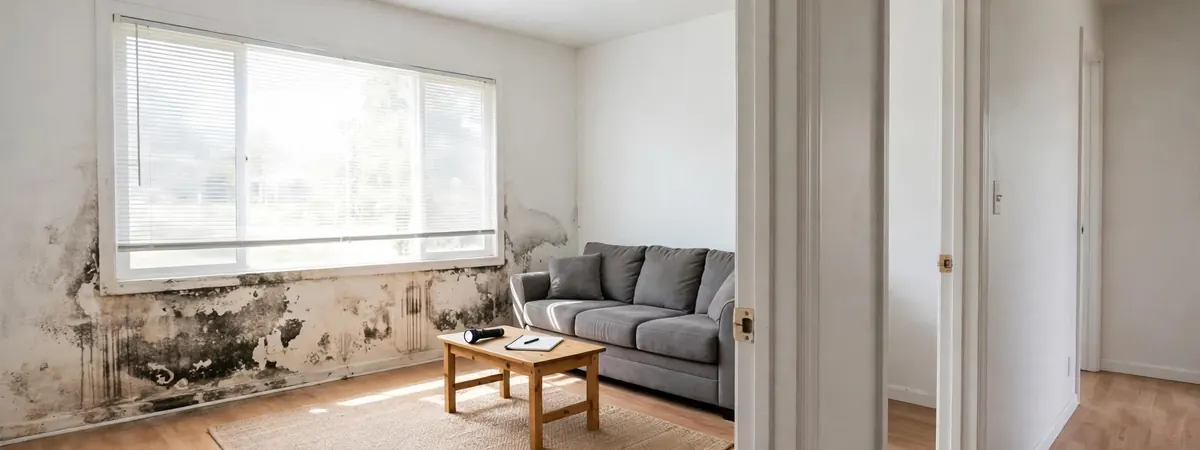
- Dark spots on the bottom of drywall or baseboards
- White, chalky deposits on masonry, called efflorescence
- Carpet that feels cool and damp
- Peeling paint near the floor
- Stored cardboard boxes that are soft or spotted
- A water line or stain on a wall
Five Checks You Can Do This Weekend
- Walk the outside. Look for soil that slopes toward the house and for gutters that overflow.
- Check window wells. Clear debris, look at the drain, and consider a clear cover that keeps snow out and light in.
- Test the sump pump. Pour water into the pit and watch the float lift and the pump run. Check the battery backup.
- Read the humidity. A small hygrometer shows if the basement sits above 60 percent. The EPA suggests staying below that, ideally between 30 and 50 percent.
- Look at stored items. Lift boxes and furniture away from the walls and the floor.
Finished Basements Hide More
An unfinished basement shows you the concrete and the framing. A finished one hides drywall, carpet, pad, insulation, and trim. Water can sit behind and under these for months. If your finished basement smells musty, the problem may be larger than the visible stain.
When to Call a Professional
- You see mold on more than a small patch of wall
- Carpet or pad has been wet for more than a day or two
- The smell is strong and you cannot find the source
- Water has entered more than once
- Someone in the home has asthma, allergies, or another sensitivity
The EPA says areas larger than about 10 square feet are generally a job for trained people. A visual and moisture check can show whether the wall is wet inside.
What Professional Cleanup Looks Like
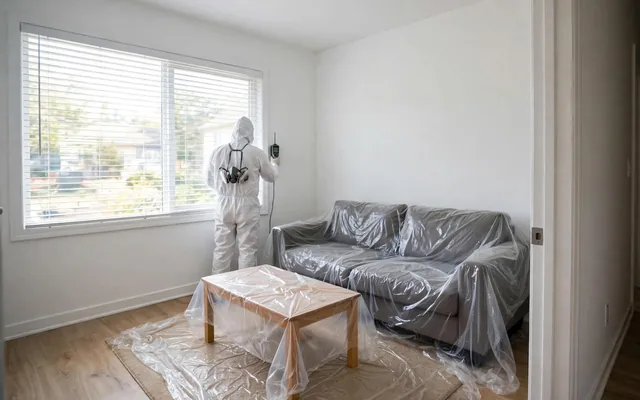
We find the source of the water, seal off the work area, and run HEPA air filtration so that the upstairs stays clean. Wet carpet, pad, and drywall that cannot be saved are removed. Framing and hard surfaces are cleaned and dried. Then we explain what repairs stop the water, from grading to drainage to the sump pump. Read more on our basement mold remediation page.
What Does Not Work
- Painting over a stain
- Spraying bleach on drywall
- Running a fan at visible mold
- Closing the basement door and hoping the smell goes away
- Replacing carpet before fixing the water source
The Bottom Line
Basement mold in Littleton is usually a water-management problem first and a cleaning problem second. If you manage the water, the rest becomes much easier. If you are not sure where the water is coming from, we can look at it with you.
Address: 8752 Cedarwood Ln, Littleton, CO 80126
Licensed and insured. Free estimates.
More Guides